Are Automations Necessary? A Deep Dive into Their Importance and Impact

Harshi Shah
Author
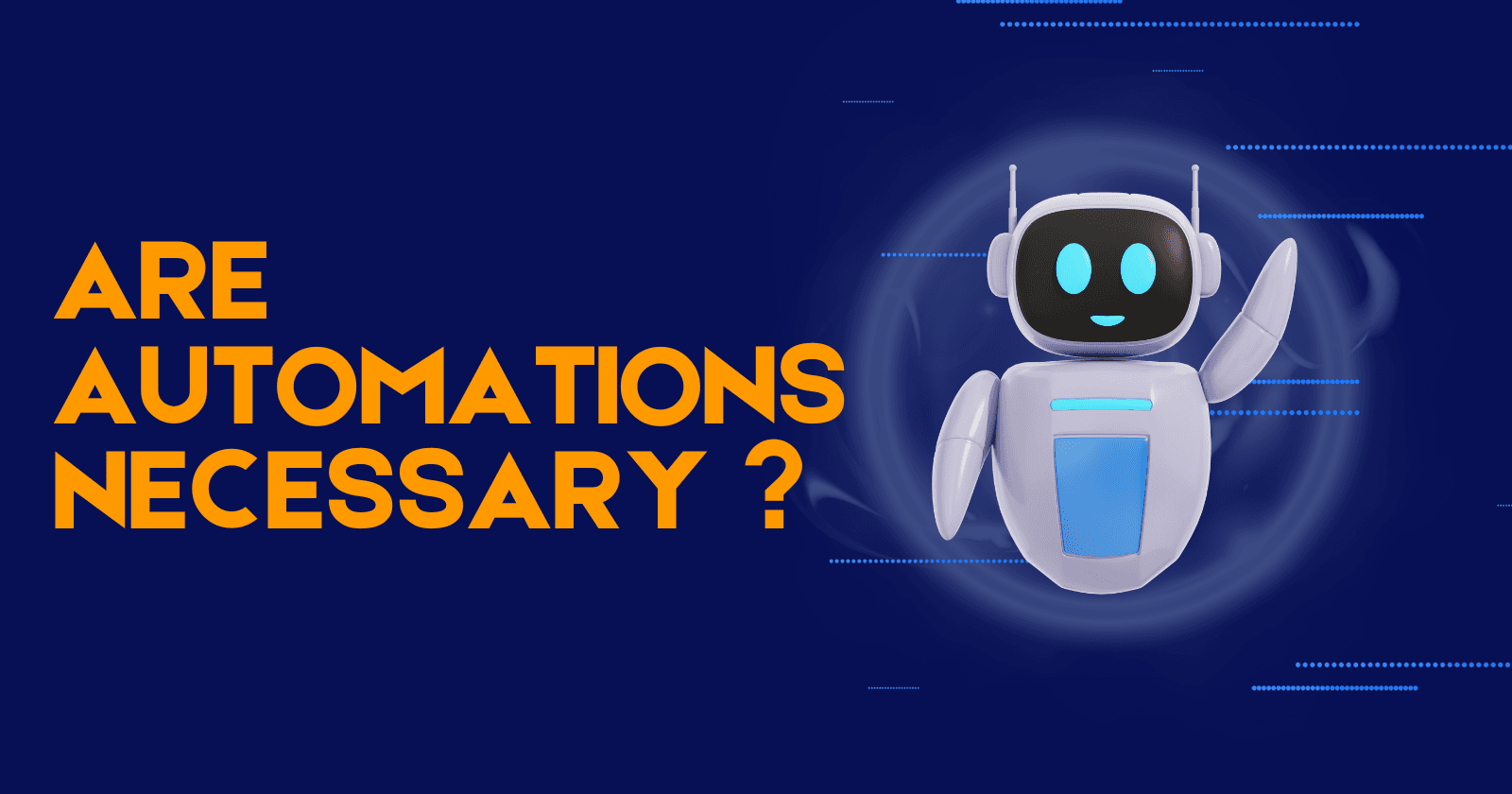
In a world moving at lightning speed, automation has become more than a buzzword , it's a cornerstone of modern life and business. Yet, the question remains:
Are automations truly necessary, or are they simply convenient luxuries?
In this blog, we’ll explore what automation really means, why it matters, where it’s essential, and when it’s better to tread carefully.
Let’s dive right in.
What is Automation, Really?
At its core, automation is the use of technology to complete tasks with minimal human intervention.
It can be:
Mechanical (like robots on a car assembly line),
Digital (like an email auto-responder),
Cognitive (like AI-driven customer service).
Automation can be seen across various domains:
| Types | Examples |
| Industrial Automation | Robotics in manufacturing, automated packaging |
| Business Process Automation | Invoice processing, CRM updates |
| IT Automation | Server backups, software deployments |
| Marketing Automation | Email drip campaigns, social media scheduling |
| Home Automation | Smart thermostats, security systems |
Automation is not just about replacing work; it’s about redesigning how work gets done.
Why Has Automation Become So Important?
There are strong, tangible reasons why automation is no longer optional for many:
🔹 Speed & Efficiency
Tasks that once took hours now take minutes.
🔹 Cost Reduction
Automation cuts operational costs in the long term, even if initial investments are high.
🔹 Accuracy & Consistency
Unlike humans, machines don't forget, get tired, or lose focus.
🔹 Scalability
Businesses can serve more customers without proportionally increasing staff.
🔹 Safety
Dangerous jobs in mining, chemical plants, and construction sites are increasingly handled by machines, saving lives.
🔹 Innovation Catalyst
By automating routine tasks, companies free up human creativity to focus on strategy, design, and growth.
Real-World Examples of Automation's Power
✨ Amazon’s Warehouses
Thousands of small robots glide around, picking and delivering products for packaging at astonishing speed.
✨ Tesla’s Manufacturing
Highly automated factories where robots weld, assemble, and paint vehicles, while humans supervise and troubleshoot.
✨ Healthcare
Hospitals automate appointment scheduling, medical record updates, and even some surgical procedures through robotic arms.
✨ Finance
Banks use AI to automate fraud detection and loan approvals, reducing processing time from weeks to minutes.
✨ Daily Life
Smart homes automatically dim lights, adjust thermostats, and lock doors, providing security and comfort.
Why Automation Isn't Always the Answer
While automation brings immense benefits, it's not a one-size-fits-all solution.
⚡ Loss of Human Touch
Automated customer service can frustrate users who crave empathy during complex issues.
⚡ High Upfront Costs
Setting up automation — especially in industries like manufacturing — requires significant capital.
⚡ Job Displacement
Some jobs, particularly in repetitive roles, are vulnerable to being replaced.
⚡ System Failures
Over-reliance can be dangerous. Imagine automated trading systems going rogue during a stock market crash!
⚡ Added Complexity
For small businesses, automation can sometimes introduce unnecessary technical debt if implemented prematurely.
So, Are Automations Necessary?
Yes :- when thoughtfully applied.
Automation is essential in areas where it:
Increases efficiency,
Enhances safety,
Improves consistency,
Supports scalability.
But mindless automation automating for the sake of automating , can be wasteful, impersonal, and even damaging.
The golden rule? Automate to amplify human ability, not to replace it.
A Simple Framework: When to Automate
Use this checklist before deciding:
✅ The task is repetitive and rule-based.
✅ Errors are costly and automation increases accuracy.
✅ The process can be clearly mapped and measured.
✅ Humans can be redeployed to higher-value work.
Avoid automating when:
❌ Human empathy or creativity is central.
❌ Processes are too complex or unpredictable.
❌ Costs outweigh long-term benefits.
Final Thoughts: Balance is the New Power
In the modern era, automation isn’t just necessary , it’s a competitive edge.
But the key is balance.
The smartest companies and individuals are not those who automate everything, but those who automate strategically.

In the future, the best workplaces and homes won’t be the ones with the most automation, but those where humans and machines collaborate beautifully.
Automate what you can. Humanize what you must.
That's the winning formula.